New Chanel fragrances 2026 | Les Eaux de Chanel | Private draft
When a fragrance is inspired by winter, it is tempting to expect dense woods, resin and a cloud of smoke. Paris–St. Moritz Les Eaux de Chanel Eau de Toilette approaches the idea differently. Chanel describes it as the collection's first winter-inspired eau and gives it a fresh fruity pear accord, an elegant rose facet and sensual musky-ambery notes. The combination aims to feel simultaneously bright and enveloping, like stepping out into Alpine air while remaining warmly dressed.
There is an important editorial challenge here. Unlike some fragrance houses, Chanel does not provide a formally labeled top-heart-base chart on the product page we reviewed. It offers a composition description. This guide keeps the distinction intact instead of inventing a strict pyramid and calling it official. We also examine the two manufacturer sizes, the story behind St. Moritz and the difference between a 2026 product launch and market-specific presale availability.
At a glance: Chanel Paris–St. Moritz is a 2026 Les Eaux de Chanel Eau de Toilette created by Olivier Polge as the collection’s first winter-inspired eau. Chanel describes a fresh pear accord, a rose floral facet and musky-ambery warmth. The product page does not present a formally labeled top–heart–base pyramid, so these three facets should not be assigned official evaporation positions.
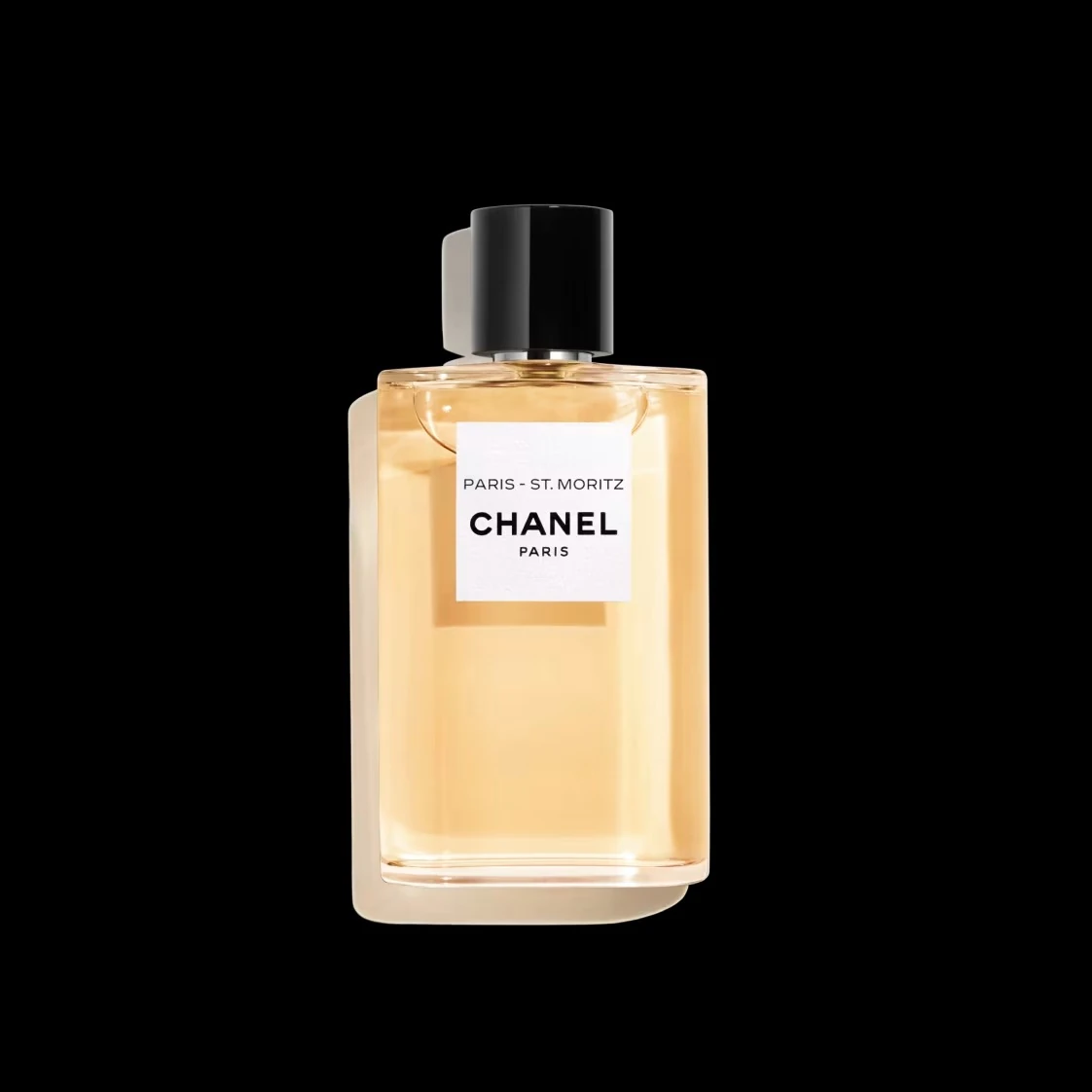
What is Paris–St. Moritz?
Chanel added this destination to its Les Eaux de Chanel collection in 2026. The house credits its in-house perfumer Olivier Polge and describes the fragrance as a luminous, warm, ambery-musky Eau de Toilette inspired by winter. The official product pages list 50 ml as reference 102660 and 125 ml as reference 102450. Those are volume variants of one product, not separate fragrance creations.
Availability requires care. Chanel's British page has described the perfume as new and available to add to a basket, while its Saudi page was marked for presale at the time of research. A product may be officially introduced in 2026 even when customers in individual markets cannot yet receive a bottle immediately. A review should avoid converting a local presale notice into a global release date or promising delivery to all regions.
Is it an Eau de Parfum?
No. Its full manufacturer name ends in Eau de Toilette Spray. Winter inspiration and an ambery description do not change the concentration. It is equally wrong to conclude that the scent must disappear quickly just because it is labeled Eau de Toilette. Concentration names alone cannot supply a reliable number of wear hours or a universal projection score.
Understanding Chanel's composition description
| Facet | House description | What to consider |
|---|---|---|
| Pear | Fresh and fruity accord | A bright counterpoint to the winter theme |
| Rose | Floral rose facet | A refined floral dimension |
| Musk and amber | Sensual musky-ambery notes | An enveloping contrast |
The rows organize Chanel’s prose; they are not officially labeled top, heart and base stages or the INCI ingredients list.
Chanel specifically names a fresh fruity pear accord, a floral rose facet and musky-ambery notes. It does not formally label the pear as a top note, the rose as a heart note and the amber-musk as a base tier in the page's composition section. A writer may interpret their contrasting roles, but presenting that inferred order as an exact manufacturer pyramid would misrepresent the source.
This matters because consumers often think a top-heart-base diagram predicts a literal timeline. A marketing composition paragraph does not give such a timeline, and the order in which three effects are described is not a scientific performance chart. What we can say responsibly is that pear provides the fruity focal point, rose contributes a refined floral quality, and the musk-amber dimension offers an enveloping counterweight.
Notes versus regulatory ingredients
Some regional Chanel pages also publish a longer ingredient list including chemical and botanical terms. That list serves a different purpose from the composition story. It does not mean each regulatory ingredient deserves to become a newly named top or base note on a perfume chart. A consumer concerned about specific sensitivities should check the package and current safety information rather than treat an olfactory accord summary as an exhaustive disclosure.
Why use a pear accord for a winter fragrance?
Pear can evoke brightness, juiciness and a soft fruity glow. Chanel's choice is particularly interesting because the destination is associated with snow and Alpine winter sports rather than a summer orchard. The fresh pear accord may be intended to keep the casual, travel-inspired spirit of Les Eaux alive, while the ambery-musk effect contributes the feeling of warmth promised by the theme.
This is an editorial reading of the structure, not a statement that the perfume smells like fresh pear juice or that natural pear extract is demonstrably present. The word accord describes a crafted olfactory effect. A shopper who dislikes very sweet fruit scents should still test it: the name of a note cannot establish the finished sweetness level or whether the effect becomes airy, tart or creamy on skin.
Will the pear dominate?
The product page doesn't give percentages or a controlled assessment of how strongly wearers perceive pear. Some noses may notice the fruity aspect first, while others may focus on the musky quality. Without direct testing, promising a pear-heavy opening would go beyond the evidence. A blotter and a modest skin test are the sensible way to explore that question before buying 125 ml.
The rose facet: elegance without an invented origin
Chanel describes the floral facet as rose. It doesn't assign a single growing country or botanical variety in the marketed composition text. So this article won't claim Turkish rose, Bulgarian rose or a specific extraction technology based only on general associations. The point of the rose here is its floral role alongside pear, not a fantasy about a rose garden the author supposedly visited.
In perfumery rose can take many forms: bright and dewy, powdery, jam-like or softened into a background effect. Which of those descriptions applies most closely to Paris–St. Moritz requires smelling the fragrance itself. A rose facet does not ensure that the entire scent belongs in a traditional rose-soliflore category, since Chanel explicitly positions it as a musky-ambery perfume.
Does the ingredient list prove natural rose is a leading note?
The ingredient declarations displayed in some territories contain rose-related substances, but regulatory labeling and olfactory ranking are different matters. A substance's appearance in an ingredient panel cannot tell us whether the wearer will identify it as the dominant heart or how long that effect persists. The responsible description remains the one Chanel actually provides: a floral rose facet within a pear-and-musk-amber design.
Amber and musk: the warmth of the Alpine concept
The third element is a musky-ambery character. Amber in modern perfumery often describes a constructed family of warm sensations rather than a single raw ingredient. Musk is an equally broad vocabulary, capable of suggesting texture, softness or a clean skin-like feeling depending on the composition. Together they can help explain why a fragrance with a fresh pear accord is nevertheless promoted as winter-inspired.
Neither term guarantees a dense trail, a resinous incense smell or a specific chemical source. Chanel speaks of an enveloping effect, not a quantified strength level. A person who enjoys soft musks might like the concept, while somebody sensitive to warm amber impressions could want a cautious sample. General descriptors should help readers decide what to try, not replace the trial.
St. Moritz and Gabrielle Chanel: a destination with history
The house connects the perfume to Gabrielle Chanel's visits to St. Moritz, where she enjoyed Alpine leisure and winter sports from the late 1920s onward. The image of warm, elegant clothing against snowy landscapes gives a cultural explanation for the name. The resulting fragrance is described as comfortable and enveloping, like winter clothing, without abandoning the spontaneous lightness of Les Eaux.
That historic reference belongs to the brand's narrative. It doesn't mean we can confidently announce notes of pine trees, ski wax, snow crystals or a fireplace if Chanel hasn't listed them. Imaginative writing can explore the contrast between the cold outdoors and personal warmth, but it should not disguise creative metaphor as firsthand sensory research.
The first winter fragrance from Chanel?
The precise claim is that this is the first winter-inspired eau in the Les Eaux de Chanel collection. It is not the same as saying Chanel has never designed any fragrance suitable for winter before. Removing the collection qualifier would exaggerate the maker's announcement, so we preserve it.
Paris–St. Moritz versus Paris–Édimbourg
Les Eaux names fragrances after destinations associated with Gabrielle Chanel's life. This can make Paris–Édimbourg and Paris–St. Moritz sound like close relatives, and their bottles share the collection's practical rounded aesthetic. But a shared theme and bottle family do not establish that their compositions are alike. The current St. Moritz release emphasizes pear, rose and musk-amber; Édimbourg has its own manufacturer description that must be assessed independently.
If you own one of the older Les Eaux, sampling the new fragrance beside it can help you decide whether the destination adds variety. Don't treat St. Moritz as an automatically stronger, sweeter or longer-lasting successor to Edinburgh because its campaign highlights winter. The two are separate creative entries, not successive intensity grades.
What about Paris–Paris or Paris–Deauville?
They belong to the same destination-led collection but carry their own scent identities. Looking up the precise city name is more reliable than searching simply for “Chanel Les Eaux perfume.” If a retailer bundles several Les Eaux products in one photograph, confirm the actual bottle label before reading the listing as though it were about St. Moritz.
Who might enjoy Paris–St. Moritz?
The perfume can be considered by anyone attracted to a fresh-fruity scent with rose and a comfortable musky-amber frame. Individual taste matters more than placing pear or rose in an exclusively feminine category. Someone seeking a sheer citrus cologne may find this concept warmer than expected, and someone who strongly dislikes fruit accords should begin with a sample.
Winter inspiration doesn't mean that the Eau de Toilette can never be used in spring or on a cool summer evening. Nor is it automatically safe to spray generously in an office just because Les Eaux is marketed as spontaneous and fresh. Start modestly in shared spaces and account for other people's sensitivity to fragrance.
Can we know its longevity?
No controlled wear test has been performed for this article. The official page does not provide an independently measured universal duration. We therefore don't assign hours, projection distances or numerical rankings versus other Chanel fragrances. Observations from a sample in your own conditions offer more relevant information than invented performance statistics.
The rounded bottle and two exact sizes
Chanel explains that Les Eaux uses a simple, rounded bottle designed to fit comfortably in the hand. For Paris–St. Moritz, the manufacturer lists 50 ml, ref. 102660, and 125 ml, ref. 102450. This distinction is useful for product identification and price comparison. The larger bottle is not a different concentration; it is the same Eau de Toilette in a greater volume.
A purchase decision should also consider availability in your region. The Saudi storefront has shown a presale status while some European pages list a price and the possibility of ordering. Check the exact local page rather than assuming a global release or shipment date. If the retailer offers a trial sample alongside an unopened-bottle return option, read the country-specific terms before relying on that service.
Which size is best value?
You can compare real offers with the ScentMira perfume price-per-ml calculator and include delivery costs or taxes. The 125 ml may offer a lower cost per milliliter, but that isn't necessarily the better purchase when you are trying the fragrance for the first time. Use value in the context of personal wear, not just arithmetic.
A useful sampling routine
First confirm that the sample says Paris–St. Moritz Eau de Toilette, not Paris–Édimbourg. Smell a blotter for an initial sense of the pear accord. If wearing fragrance is appropriate for you, test a small amount on skin and revisit it later to see whether rose and musky-amber textures make the composition comfortable. Try not to overload your nose with several strong perfumes in the same session.
If a note seems different from the manufacturer's description, that doesn't prove your observation is invalid. Notes are communication tools, not a checklist of materials each wearer must consciously recognize. The final question is whether you actually want this scent in your routine. Neither the history of St. Moritz nor the novelty of a 2026 launch can answer that for you.
Verdict: winter warmth without abandoning freshness
Paris–St. Moritz adds an interesting seasonal idea to Les Eaux de Chanel. Its exact official facts are straightforward: a 2026 winter-inspired Eau de Toilette by Olivier Polge, based on a pear accord, a rose facet and musky-ambery notes, available in 50 and 125 ml formats on regional manufacturer pages. The editorial care lies in not inventing a rigid top-heart-base pyramid or transferring unrelated ingredient facts from another Chanel scent.
If you are drawn to the idea of light fruit with a softer warm backdrop, it deserves a place on your sampling list. If you already have several Les Eaux, compare rather than automatically replace them. Use the official edition name and local availability when shopping, and let personal testing settle questions that a composition paragraph cannot answer.
Frequently asked questions
Is Paris–St. Moritz a new 2026 Chanel fragrance?
Yes. Chanel presents it as a new winter-inspired destination in the Les Eaux collection.
Who created it?
In-house perfumer Olivier Polge, according to Chanel.
Is it an Eau de Parfum?
No, the product is labeled Eau de Toilette Spray.
What are the official scent notes?
The manufacturer describes a fresh fruity pear accord, rose facet and musky-ambery notes.
Does Chanel provide a formal note pyramid?
The product page reviewed contains a composition paragraph, not a labeled top-heart-base table.
What are the two manufacturer sizes?
50 ml, reference 102660, and 125 ml, reference 102450.
Is it in stock in Saudi Arabia?
The Saudi page displayed a presale label when researched; check the live regional listing for the current purchase situation.
Is its wear time guaranteed?
No universal hour count can be verified from the composition description alone.