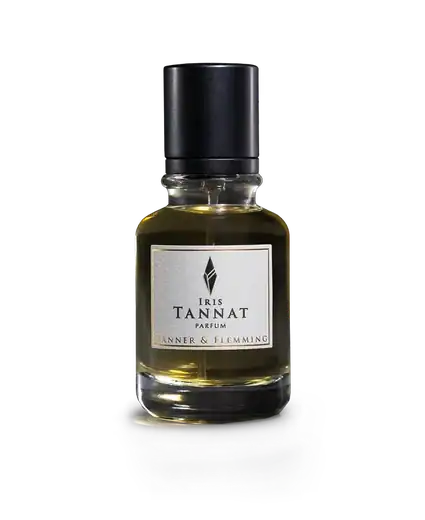
The unusual story behind Iris Tannat
Iris Tannat is the fourth iris-focused fragrance from independent German house Danner & Flemming. It arrived in October 2026 after Iris Altesse, Iris Poulsard and Iris Trousseau, with a different emphasis on darker mineral and wine-related facets. The scent was composed by Antoine Lie and belongs to a limited 2026 selection of 893 numbered bottles. The name takes its inspiration from Tannat, a grape associated with robust wines, rather than implying that the fragrance is made from a finished wine.
The release timeline deserves precise wording. Retailers reported presales beginning around October 21 and initial distribution around October 23, although some sources use October 21 as the launch date. Both mark the introduction of this edition, not multiple separate products. Because a niche release can sell out or ship at different moments by market, availability should be checked directly. This review discusses documented materials and purchasing factors; it does not invent an editor's skin test.
Two iris varieties instead of a generic floral note
The house emphasizes Bavarian Iris pallida butter and Iris germanica extract. This is central to the identity of Iris Tannat: it uses two varieties from the producer's farming and extraction work rather than citing an abstract iris accord alone. The declared iris dosage amounts to around 3.5 percent of the perfume oil, according to descriptions accompanying the launch. That percentage refers to the concentrate and should not be presented as 3.5 percent of the finished bottle.
Iris in perfumery can suggest powder, earth, minerals and an elegant dryness, and this composition deliberately explores those possibilities. However, the note list does not establish precisely when the two varieties become distinguishable on skin. The best sampling question is whether the iris stays recognizable despite wine, oak and leather-related facets. Fans of straightforward floral scents should understand that this is not designed as an airy bouquet of iris petals.
A wine-inspired fragrance without becoming a drink
The concept draws on Tannat wines from the Basque region, where vineyards and oak aging helped inspire the brief. Wine lees extract is one of the listed materials, and the reference can imply fermented, mineral or earthy impressions. Yet a description of wine culture is not evidence that the fragrance resembles a glass of red wine in a literal or universally recognizable way. It also should not be confused with a food or beverage that the wearer is meant to consume.
This interpretation of winemaking gives Iris Tannat a different context from conventional powdery iris perfumes. Instead of pairing iris only with clean musk or delicate woods, the house relates its cultivated rhizomes to a landscape and the texture of aged barrels. During a trial, observe whether the wine association adds interesting depth or feels foreign to your preferences. The creative metaphor should invite curiosity without overruling your own reaction.
Oak barrel CO2 extract and aged-wood texture
An oak barrel CO2 extract is another key material named by the manufacturer and retailers. This is a distinctive way of describing the woody side of the perfume, linking scent production with the barrel-aging tradition. It may evoke the dark wood, toast and mellow warmth associated with cooperage, but those are interpretive cues rather than a measured list of molecules. The exact processing and proportions of each ingredient are not public in a way that permits independent reconstruction.
The connection between oak and iris is arguably more important than simply asking whether the perfume smells woody. The powdery aspects may give the wood elegance, while the wood may lend the iris a denser frame. Some people may enjoy that tension; others may want iris in a softer, cleaner treatment. Try to decide whether the materials support one another rather than searching for an isolated oak note in every minute of the wearing experience.
Suede, patchouli and a more tactile character
The note description includes a suede accord and patchouli oil. Suede suggests a supple leather-like texture without necessarily meaning literal animal leather was placed in the liquid. Patchouli provides another earthy association, which can reinforce the dry and grounded presentation of iris. Together, these words reveal why Iris Tannat belongs to a darker niche-perfume direction than a powdery office fragrance. They do not guarantee that every wearer will detect a strong leather effect.
When sampling, ask whether the suede impression feels soft enough for your use or whether the combined earthy facets are too assertive. The right answer depends on the perfumes you already enjoy. A scent can be technically interesting and still be a poor match for someone's daily routines. This is especially important with a limited, expensive bottle: exploring how it feels after the opening has passed is more sensible than buying from the rarity story alone.
Rose, ylang-ylang and nutmeg
Rose absolute and ylang-ylang oil appear among the supporting materials, with nutmeg oil bringing a spice reference. The flowers introduce opportunities for warmth and refinement without turning the composition into a conventional floral bouquet. Nutmeg may add tension alongside suede and oak. But the brand does not publish an exact top-heart-base schedule for all these listed materials. It would be misleading to impose a precise sequence and then describe it as a confirmed wearing trajectory.
Listeners to fragrance discussions may hear that iris and rose invariably become powdery, or that nutmeg always produces a cozy winter effect. Neither assumption is reliable across formulas. In Iris Tannat the more useful perspective is a blend of cultivated iris, woody structure and subtle floral or spicy color. Let the sample develop before deciding whether the combination is elegant, austere, warm or overly demanding for your own taste.
Rum and vetiver alongside the wine theme
Rum extract and vetiver marc extract deepen the composition's unusual ingredient story. Rum belongs to the language of spirits and can imply a rounded warmth, while vetiver frequently provides an earthy, dry or grassy association in perfumery. The presence of both does not prove that the bottle contains drinkable rum or that the fragrance is an alcoholic beverage. These are perfumery materials and accords, and their effect depends on how the fragrance was built.
For some shoppers, those materials may make the dark iris concept feel complete: mineral soil, oak, wine-related textures and an aromatic finish. For others, they may complicate a note they would prefer to smell on its own. Try not to judge solely by a dramatic description of a vineyard. The actual smell must be pleasant enough that you want to return to it, particularly given the limited supply and price.
Limited edition: 893 bottles and a 50 ml format
The launch was described as a numbered selection of 893 bottles, presented in a handcrafted, hand-numbered box. The official home page listed the perfume at €320, while a US specialist retailer offered the 50 ml eau de parfum for $375. Prices and stock positions can change. A retailer may say sold out even while another still accepts an order. The numbers here are observations from launch material, not promises of current global inventory.
At €320 for 50 ml, the introductory unit price is €6.40 per milliliter before shipping and local taxes. That is a substantial commitment. Limited stock may increase interest, but scarcity does not establish whether a person will enjoy the scent. Consider a legitimate sample if available, review the seller's terms and check import restrictions before purchasing internationally. A beautiful collector's box should not replace the question of actual wearability.
The perfumer and the grower's role
Antoine Lie is credited with creating Iris Tannat, while Danner & Flemming emphasize the cultivation and extraction of iris from their Bavarian growing operations. That vertical relationship between field and bottle is unusual enough to be an important part of the product's identity. The iris rhizome requires time and processing to provide perfumery material, which helps explain why the house focuses so strongly on provenance and concentration.
Understanding provenance enriches the story but does not guarantee a perfect fragrance for every user. A natural origin is not itself evidence of improved safety or better performance, and expensive ingredients do not eliminate the need to like the completed blend. Compare the brand's ingredient statements with your own impressions, and be cautious about generic marketing claims that equate concentration with guaranteed longevity. A credible review should preserve those distinctions.
Iris Tannat versus the other three iris fragrances
Iris Altesse, Iris Poulsard and Iris Trousseau established the house's grape-name theme before Iris Tannat. The newcomer is described as taking a darker direction and as combining two iris varieties for the first time within this collection. That is more meaningful than assuming the four fragrances smell alike because they share cultivated iris. Tannat adds wine lees and barrel extracts to a particular interpretation of the raw material.
If you already own one of the earlier fragrances, ask what the new release would add. Is a darker, more textured iris what your collection lacks? Or do you prefer the existing treatment? Sampling each independently avoids purchasing a new bottle solely to complete the set. For a first-time buyer, the complexity of Tannat could be fascinating, but it may not provide the most straightforward introduction to the house's iris style.
Strengths, limitations and realistic performance expectations
Strengths of Iris Tannat include documented use of two iris varieties, a clearly named perfumer, an unusual wine-and-oak idea and a verifiable limited 2026 edition. Potential limitations include its high price, scarce availability and a profile that could be too earthy, woody or suede-like for fans of simple clean florals. These are buyer-focused considerations rather than evidence of production flaws or a laboratory performance score.
The opportunity lies in exploring the contrast between mineral iris and the textures of a wine cellar. The risks include buying blindly because of scarcity or confusing the 3.5 percent iris concentration in perfume oil with a finished-product percentage. Neither that figure nor an online rating can guarantee hours of wear. An honest account acknowledges that a complicated composition may reward patient sampling while remaining unsuitable for someone's preferences.
A measured final recommendation
Iris Tannat is worth investigating for serious iris enthusiasts who are curious about an earthier, wine-inspired direction. Its concept connects plant cultivation, unusual extracts and craftsmanship, giving the release a distinctive point of view. This is an evidence-led editorial guide rather than an account of a personal wear test, so it does not promise specific projection distances, compliments or a standardized duration.
Start by trying a trustworthy sample if possible. Notice the iris immediately and later, then consider whether the wine lees, oak, suede, flowers and woods create a coherent result for you. Revisit the aroma at different stages without layering unrelated strong fragrances. Finally, calculate the full delivered price and inspect return terms. A limited edition is an opportunity to discover something rare, not an obligation to buy it.
Frequently asked questions
When did Iris Tannat launch?
Presales appeared around October 21, 2026, with launch and initial retailer arrival described around October 23. Local availability varies.
Who is the perfumer?
Antoine Lie is credited as the perfumer behind Danner & Flemming Iris Tannat.
Does it contain two iris varieties?
Yes. The stated materials include Bavarian Iris pallida butter and Iris germanica extract.
What does 3.5 percent iris mean?
It refers to the iris materials in the perfume oil concentrate, not a measured percentage of the finished spray.
How limited is the edition?
The original Millésime Selection 2026 was announced as 893 numbered 50 ml bottles.