What MERIT changed with New Wave
New Wave L’Extrait de Parfum is MERIT's second fragrance after Retrospect, introduced on October 22, 2026. Rather than repeating Retrospect's quiet, clean direction, New Wave explores a more vivid structure of spice, sunlit flowers, incense, amber and woods. The fragrance was created by Dominique Ropion and Meabh McCurtin, and the company presents it as a nearly 30 percent oil concentration. Those are documented design choices, not proof that everyone will experience the same strength or duration.
The brand's interest in modernist and surrealist art helps explain the project. It aims to revisit a classical amber structure while introducing brightness and movement. The description may sound abstract, but it gives a useful buying clue: this is not primarily a fresh citrus splash or a simple sweet vanilla perfume. It is an ambitious floral-amber blend with substantial base-note complexity. A person who loves understated fragrances should test it rather than assuming that MERIT's minimalist cosmetics predict a minimalist perfume.
A lively opening: pink pepper and angelica seed
The official top notes are pink pepper and angelica seed. Pink pepper suggests a lively sparkling accent rather than the dense heat of black pepper used in food. Angelica seed introduces a green, aromatic contrast that can keep an opening from leaning too sweet. Together, they create a different point of entry from the bergamot-and-lemon formula familiar in many fragrances. But the fact that the company lists these notes does not establish their exact duration or strength on skin.
If you typically dislike spicy perfumes, think carefully about the difference between a sparkling top note and a heavy, persistent spice accord. Likewise, people seeking sharp freshness should recognize that green aromatics are only one portion of this complex formula. When sampling New Wave, observe how its first impression interacts with the warmer base that may already be perceptible. Do not attempt to match every minute to a scripted pyramid: even perfumers describe the structure as deliberately unconventional.
The radiant floral heart
Orange flower, ylang-ylang and a honeyed floral accord form the declared heart of New Wave. Orange flower can evoke brightness and softness; ylang-ylang brings an expressive floral association; the honeyed accord suggests warmth without requiring the fragrance to smell literally like a spoonful of honey. The brand talks about a solar floral sensation, which should be understood as the overall atmosphere rather than as an individual material that can be measured with a stopwatch.
This floral center offers an important counterbalance to incense and amber. Someone who enjoys warm florals may find the combination appealing even if they usually avoid heavily woody fragrances. Conversely, a person looking for a restrained white-flower perfume might consider the larger base-note list a reason to sample cautiously. In your notes, distinguish what you actually smell from the intended mood: a perfume may evoke sunlight in its story while smelling quite different in air-conditioned rooms.
The amber architecture: benzoin, labdanum and olibanum
MERIT lists benzoin, labdanum and olibanum among the foundation materials. They belong to a long tradition of resinous, ambery perfumery and help explain why experts describe New Wave as a contemporary interpretation of classic amber. This is not necessarily an animalic, smoky or dense formula for every wearer: combinations and dosage change the final effect. The manufacturer's note list cannot tell us exactly how obvious each resin will become after a given number of minutes.
A good test looks for the relationship between the floral heart and resinous depth. If the amber-like effect feels warm without overwhelming the spices and flowers, that balance may be a reason to choose New Wave. If it dominates everything you enjoy about a bright opening, the scent could be poorly matched to your wardrobe. Neither observation is a verdict on technical quality. It simply shows why a detailed note structure is useful for shortlisting rather than buying without testing.
Woods, incense, patchouli and tobacco
The foundation continues with patchouli heart, cypriol, vetiver, a tobacco accord, cedarwood heart and oakwood. These materials expand the range from earthy and woody to dry, aromatic and potentially smoky. The reference to tobacco is an olfactory accord, not evidence of tobacco leaf in a cigarette or nicotine in the perfume. Similarly, an incense impression need not resemble thick ritual smoke. This is a composition built from several contrasts rather than a single ingredient trying to do everything.
For people who normally gravitate toward modern woods, New Wave offers a way to explore amber without surrendering structure. The woods may make the scent more grounded than a pure floral. For shoppers who prefer fruit or marine freshness, that same grounding can feel unexpectedly serious. Listen to your reaction when the opening has faded: does the drydown feel polished, rough, cozy or distracting? These personally meaningful words can guide your choice more reliably than unverified performance rankings.
Vanilla, tonka, Ambroxan and musk
The base also includes vanilla bean, tonka bean, Ambroxan and musk. They can contribute to an impression of softness or warmth alongside the resins and woods, but New Wave should not be reduced to a dessert fragrance just because vanilla appears in the published list. The brand's description emphasizes a warm spicy floral architecture, not custard or caramel. The possible sweetness serves a complex foundation, and the resulting balance should be evaluated on the skin.
Ambroxan often appears in modern perfumery discussions around diffusion, but a single ingredient name cannot establish how far New Wave travels from a person. Likewise, musk can feel intimate or prominent depending on the full formula. If you want a signature scent for daily use, spend time with the drydown instead of judging the bottle from its first spray. Comfort over several hours is more important than a brief spectacular opening.
What nearly thirty percent perfume oil does and does not mean
New Wave is sold as an extrait with almost 30 percent fragrance oil. MERIT highlights concentration as part of its identity, and certain reviewers describe impressive longevity. Those personal reports offer context, not a universal guarantee. Skin chemistry, the environment, materials and application affect wear. The percentage is a meaningful manufacturer statement, yet it should not be converted into a fixed number of hours or a claim of room-filling projection for every owner.
In a small office or on a warm day, begin with one conservative application and allow the perfume to develop. A fragrance designed to have presence can become excessive when reapplied frequently without considering other people. If you stop noticing it, this might involve olfactory adaptation, but that alone cannot prove that it has disappeared or continues strongly. A thoughtful trial separates enjoyment, perceived intensity and actual need for another spray.
The sculpture-like bottle and two sizes
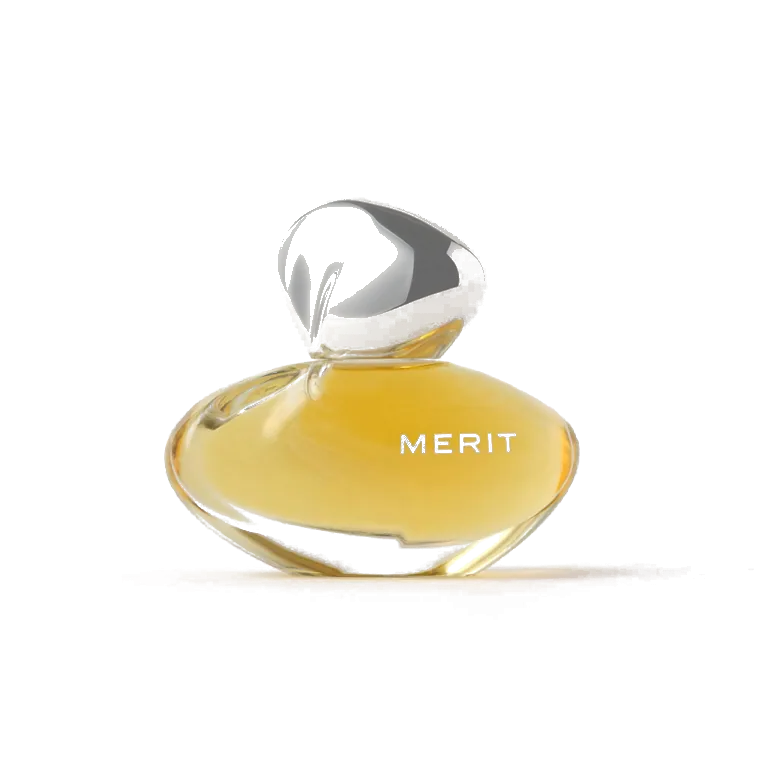
The custom New Wave glass bottle draws on surrealist art and the idea of a moving wave, according to MERIT. Its warm golden coloring and sculptural curves reinforce the perfume's modern amber identity. The exact official product photograph should be used to distinguish this release from Retrospect, which has a different presentation. An attractive bottle is a legitimate part of a luxury purchase, but it offers no direct evidence about scent quality or comfort.
The US site presents 9 ml travel size at $34 and 30 ml full size at $92, with an optional monogram service for an additional fee. That engraving can change return eligibility; check the seller's current terms. Price per milliliter is approximately $3.78 for 9 ml and $3.07 for 30 ml before tax. The larger bottle offers better unit value, but a small format could be the smarter decision when the note structure is unfamiliar.
How New Wave differs from Retrospect
Retrospect is MERIT's first fragrance and is generally presented as softer, cleaner and more intimate. New Wave goes in the opposite direction, combining pink pepper, floral warmth, incense, woods and an ambery base. The comparison is useful because familiar packaging language or a shared brand name can create an expectation of continuity. In reality, an admirer of the first fragrance may not automatically love the second, and someone who overlooked Retrospect may be drawn to New Wave.
Try them separately if a shop offers both. Notice whether New Wave's resinous texture makes the heart more interesting or heavier than you prefer. If you are seeking a refined fragrance that remains close to your skin, the original may fit more naturally; if you enjoy expressive spicy florals, explore New Wave. Neither perfume is inherently more sophisticated because it is newer, stronger or associated with a more famous perfumer.
Who might enjoy it, and when?
A shopper who enjoys classic amber fragrances but wants a bright modern reinterpretation is a logical candidate for New Wave. Pink pepper and angelica can add energy, while orange flower and ylang-ylang connect the warmth to a floral mood. The heavier materials may make it inviting in cooler weather, but seasonal labels are suggestions, not rules. A moderate application can be appropriate in many settings if you genuinely enjoy the scent.
People who prefer extremely light waters, sparkling citrus or simple powdery musk may find the overall concept unusually layered. Others will welcome precisely that complexity. Imagine where you would actually wear New Wave, what you already own and whether the composition fills a useful gap. Do not buy on the assumption that a new launch will automatically earn compliments. It should fit your preferences and the people sharing your space.
Strengths, weaknesses and buying risks
New Wave's strengths include clearly documented perfumers, a distinctive neo-amber concept, an unusually detailed official note list, a choice of formats and a recognizable bottle. Its potential limitations include the premium price for a small total volume, complex woods and incense that some may find heavy, and limited stock in certain regions. These are practical purchasing considerations rather than an invented numerical score for longevity or formulation quality.
The opportunity is to find a modern floral amber that develops in interesting ways; the risk is ordering blind because reviews emphasize its sophistication or compare it favorably with much more expensive niche perfumes. Those comparisons depend on personal taste. Look for a sample, validate the correct edition and consider return restrictions on engraving. A balanced evaluation should make refusing the purchase just as legitimate as celebrating it.
An evidence-based final verdict
New Wave deserves a place on the sampling list of anyone curious about contemporary amber and complex warm florals. Its combination of bright pink pepper, creamy flowers, resins and woods is more layered on paper than a conventional single-note perfume, and the named perfumers provide useful creative context. This is a documentary assessment; it is not a fabricated first-person wearing test and cannot guarantee that all notes will appear exactly as written.
Test a small amount on clean skin, revisit it as the opening settles and compare the deep drydown with your daily preferences. Verify the current price and retailer's rules before choosing a full size. The best purchase is a scent that remains appealing in your ordinary life, not simply a perfume with an impressive formula or fashionable artistic inspiration. New Wave rewards curiosity, but your own nose should make the final decision.
Frequently asked questions
When was New Wave released?
MERIT launched New Wave L’Extrait de Parfum on October 22, 2026, with a travel size and a 30 ml bottle.
Who created New Wave?
Perfumer Dominique Ropion and perfumer Meabh McCurtin collaborated on the fragrance.
Is New Wave a vanilla gourmand?
Vanilla and tonka appear in the base, but the official classification is warm spicy floral with resins, incense and woods.
Does the 30 percent oil concentration guarantee 12 hours?
No. Nearly 30 percent is the brand's stated specification; wear time varies and cannot be guaranteed for everyone.
What is the difference between New Wave and Retrospect?
New Wave emphasizes a brighter spicy floral amber, while Retrospect is generally positioned as softer, cleaner and more skin-like.