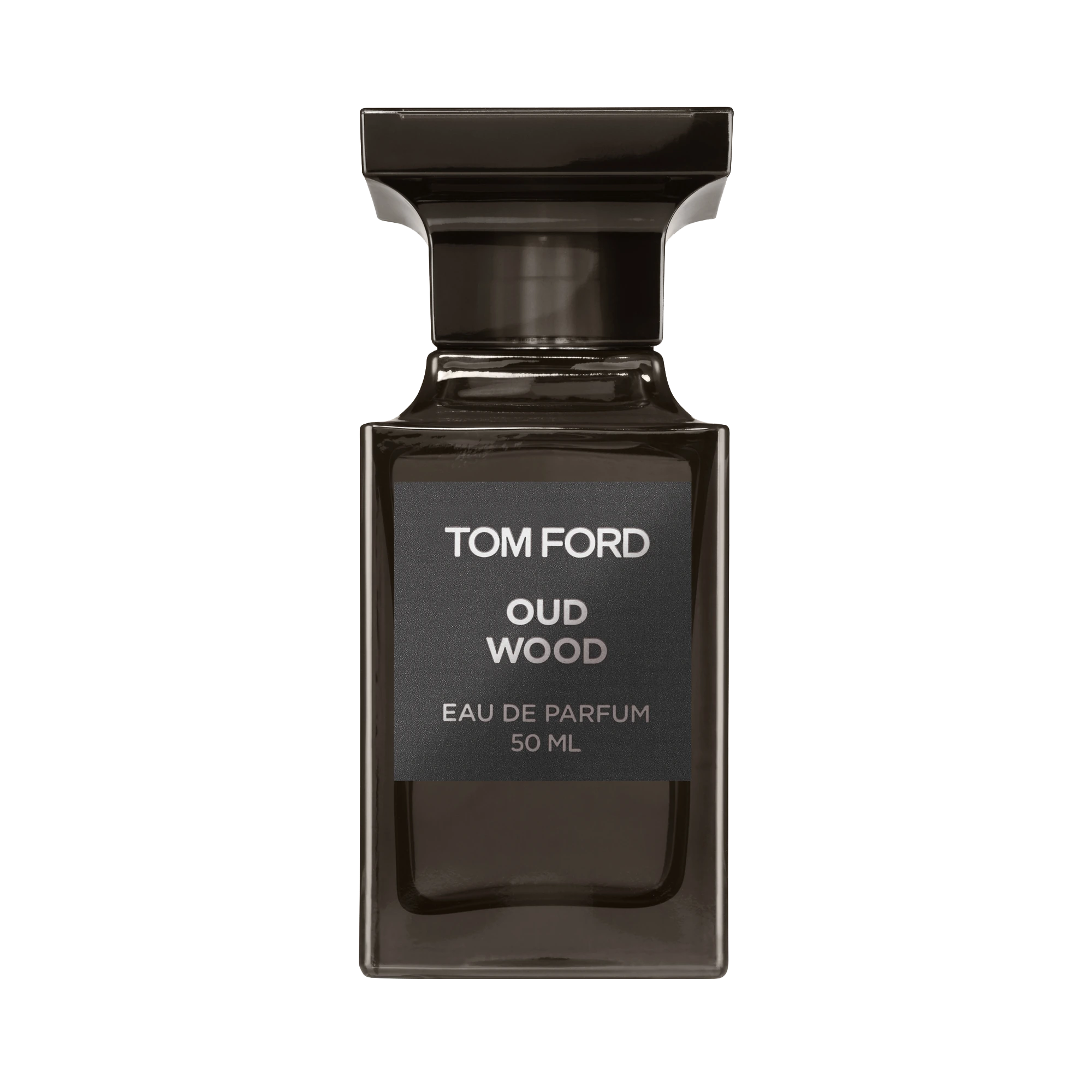
Which perfume is this?
Tom Ford Oud Wood Eau de Parfum
Tom Ford Oud Wood Eau de Parfum highlights smoky oud notes, exotic woods, cardamom, sandalwood, vetiver, amber and tonka. An oud note is not a disclosed percentage of natural oud oil.
Identifying the correct edition
Oud Wood Eau de Parfum is distinct from other Oud Wood concentrations and formats. It also differs from Ombré Leather, whose signature is a black leather accord.
Notes are not the chemical formula
A fragrance category describes an olfactory direction, not exact ingredient percentages or a universal number of wear hours. Marketing notes and the ingredient declaration are different information.
Official scent notes explained
Cardamom, rosewood and pink pepper
The house opens its narrative with cardamom and rosewood and lists pink pepper as a key note. These suggest a spicy-woody direction.
Oud, sandalwood and vetiver
Oud notes combine with sandalwood and vetiver in Tom Ford's description. The wording does not state how much natural agarwood oil is used.
Tonka, amber and patchouli
Tonka and amber provide a warm impression, and patchouli features in the key-note list. None of these labels is a formula percentage.
A fragrance category describes an olfactory direction, not exact ingredient percentages or a universal number of wear hours. Marketing notes and the ingredient declaration are different information.
How does it smell?
Tom Ford Oud Wood Eau de Parfum highlights smoky oud notes, exotic woods, cardamom, sandalwood, vetiver, amber and tonka. An oud note is not a disclosed percentage of natural oud oil.
Fragrance family and accords
What does the family describe?
The house opens its narrative with cardamom and rosewood and lists pink pepper as a key note. These suggest a spicy-woody direction. Oud notes combine with sandalwood and vetiver in Tom Ford's description. The wording does not state how much natural agarwood oil is used. Tonka and amber provide a warm impression, and patchouli features in the key-note list. None of these labels is a formula percentage.
Notes are not the chemical formula
A fragrance category describes an olfactory direction, not exact ingredient percentages or a universal number of wear hours. Marketing notes and the ingredient declaration are different information.
How do editions differ?
Why edition names matter
Oud Wood Eau de Parfum is distinct from other Oud Wood concentrations and formats. It also differs from Ombré Leather, whose signature is a black leather accord.
How to sample and choose
A useful comparison method
Test the scent first on paper and then on skin where possible. Revisit it after the opening and compare different editions on separate strips.
Personal perception varies
Try Oud Wood beside Ombré Leather on separate strips to understand the contrast between oud-themed woods and leather with jasmine.
Frequently asked questions
Which official notes are highlighted?
Cardamom, rosewood and pink pepper؛ Oud, sandalwood and vetiver؛ Tonka, amber and patchouli
Are the notes the full ingredients?
A fragrance category describes an olfactory direction, not exact ingredient percentages or a universal number of wear hours. Marketing notes and the ingredient declaration are different information.
How do I identify this edition?
Oud Wood Eau de Parfum is distinct from other Oud Wood concentrations and formats. It also differs from Ombré Leather, whose signature is a black leather accord.
How should I sample this scent?
Try Oud Wood beside Ombré Leather on separate strips to understand the contrast between oud-themed woods and leather with jasmine.
Key takeaways
Tom Ford Oud Wood Eau de Parfum highlights smoky oud notes, exotic woods, cardamom, sandalwood, vetiver, amber and tonka. An oud note is not a disclosed percentage of natural oud oil.
Try Oud Wood beside Ombré Leather on separate strips to understand the contrast between oud-themed woods and leather with jasmine.
Related reading
Existing review · Tom Ford Ombré Leather · Perfume encyclopedia
Oud in perfumery · Sandalwood in perfumery · Vetiver in perfumery