Start with the year and concentration
Gap Dream Eau de Parfum 2026 belongs to the modern Gap Beauty collection introduced in July 2026. Dream itself is a historical name, so calling this the first Dream perfume would be misleading. The new release is a reimagined eau de parfum, a distinction worth keeping in mind when search results mix vintage bottles, older reviews and current product listings under the same short name.
This article concerns that current edition. Our analysis follows the manufacturer's product information and launch account, with editorial guidance for evaluating the composition. We have not performed a personal wear test or a controlled comparison against a vintage bottle. The point is to help you separate the product's documented identity from nostalgia, then decide which aspects to examine when you have a sample in front of you.
A floral musk with a woody framework
The product page classifies Dream as floral musk, while the launch announcement emphasises a warm woody impression with bergamot, jasmine and cedarwood. These descriptions need not be treated as competing formulas. One labels the broad scent category and the other highlights a few facets. Read together, they suggest that the flowers and the base deserve attention alongside the brightness implied by the citrus opening.
That is a more useful starting point than assuming Dream is an uncomplicated citrus fragrance. If you want something airy but dislike a woody aftertaste, pay particular attention to the later stage. If you appreciate florals with structure, the cedarwood reference may be attractive. These are reasons to sample, not claims about how strong, dry or creamy the fragrance has proved on our skin or on every other wearer.
Bergamot, neroli and orange blossom
Italian bergamot, neroli essence and orange blossom form the published top notes. Neroli and orange blossom belong to a related floral vocabulary, but appearing together does not make them redundant labels. In an olfactory description they can point to different facets within the opening. The list does not reveal the amounts used, and it cannot establish that one ingredient will dominate from the first spray until the drydown.
For your trial, consider whether the opening feels primarily citrus-led, floral-led or balanced between the two. Someone seeking the sharpness of citrus peel may judge it differently from someone interested in a soft blossom impression. Neither response needs to contradict the official notes. Avoid replacing the actual observation with a preselected image of an orange orchard: descriptions should guide the nose rather than dictate what you must perceive.
Jasmine, tagete flower and freesia
Gap lists jasmine, tagete flower and freesia in the heart. Tagete refers to the marigold-related note named by the house; it should not be silently replaced with rose or another familiar flower. Equally, the presence of a flower name does not prove the bottle contains its natural extract. A note list describes an intended olfactory impression, whereas an ingredient declaration serves a different purpose.
The question for a prospective wearer is how the floral centre relates to the opening. Does it preserve the lightness you liked, or move towards a fuller bouquet than you wanted? Give this part of the perfume space in your decision. A blotter sprayed briefly in a shop can help identify the general direction, but a longer personal sample trial offers a better chance to evaluate that transition in ordinary surroundings.
Cedarwood, botanical musks and glowing amber
The documented base combines cedarwood, botanical musks and glowing amber. The last two are descriptive terms from the product page, not proof of a wholly natural musk formula or a particular amber raw material. Do not interpret botanical as a complete sourcing certificate. You can understand the intended musky and ambery frame without inventing extraction methods, natural percentages or ingredient provenance not supplied in the published information.
When testing, focus on whether the later impression remains comfortable once the initial freshness is less prominent. You do not need to distinguish every base note independently. A short observation such as floral and softly woody may be sufficient to explain your preference, while an uncomfortable dry or sweet facet is worth recording just as clearly. Choosing well does not depend on producing an elaborate technical description of every stage.
How to approach the vintage comparison
Gap says Dream returns closest to its original form within the revived collection. That is a statement about the brand's approach, not an independently measured similarity percentage. Reformulation, different concentrations and the condition of an old bottle complicate any direct comparison. A memory of wearing Dream years ago also includes place and context, which cannot be separated neatly from a single modern spray on a test strip.
If recreating a personal memory is your main objective, test the 2026 eau de parfum before committing to a large bottle. Ask whether it gives you the kind of floral-musk experience you wanted today, even if the recollection is not exact. If you can compare with a vintage bottle, describe the bottles and their condition rather than treating one old sample as definitive evidence for every batch of the original perfume.
Wearing it as a present-day fragrance
A floral-musk direction can be explored for everyday use, but it does not automatically guarantee discretion in every office or climate. Your amount, surroundings and comfort with the floral heart all matter. Try Dream during a familiar activity and observe whether you enjoy returning to its scent as the day changes. There is no need to assign it a mandatory age group, gendered wardrobe or narrowly defined season.
Gap presents the collection at 20% concentration. Record that specification without converting it into a universal number of hours. Persistence close to the skin and projection into a shared space are separate observations. For a fair trial, keep other scented products away from the test area and return later rather than smelling continuously. If your purchase depends on performance, use your normal setting instead of relying on an unverified promise of all-day diffusion.
Finding the bottle you actually sampled
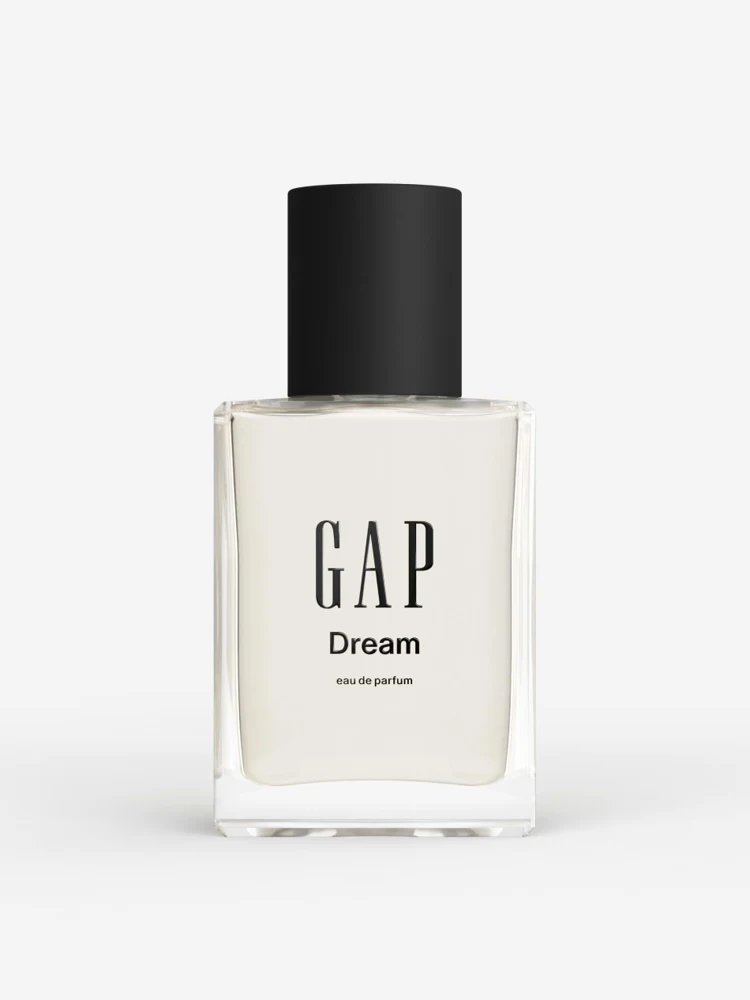
The current clear bottle carries Dream and eau de parfum beneath the Gap name, with a dark cap; the image here comes from the matching manufacturer's page. Check the listing's year context, concentration and volume rather than relying on Dream alone. Dream More, a vintage Dream listing and the 2026 eau de parfum should not be merged merely because the main name is similar or a seller uses an abbreviated title.
Launch formats include 10 ml and 50 ml, which are sizes of the same edition. A smaller format can make sense when you are still deciding how the floral heart fits your routine; a larger one may offer better value once you know you will use it. Compare final delivered cost, not just the headline price. This guide does not invent a current local retailer price, confirm third-party stock or guarantee the authenticity of an individual listing.
Frequently asked questions
Is Dream a new perfume name from 2026?
No. Dream is historical; this guide covers the reimagined 2026 Eau de Parfum introduced with the Gap Beauty collection, rather than claiming the name began that year.
What notes does the current edition list?
Bergamot, neroli and orange blossom open the description, followed by jasmine, tagete flower and freesia, then cedarwood, botanical musks and glowing amber in the base.
Is it identical to the original Dream?
The brand describes it as the closest return to the original within the collection. We have not verified an exact match or measured similarity, and an old bottle's condition can affect any comparison.
Does 20% mean a guaranteed wear time?
No. It is the published concentration, not a personal performance result. This source-based guide gives no fixed longevity or projection guarantee and claims no hands-on wear testing.