The new name in a returning fragrance collection
Gap Harmony Eau de Parfum is the new addition to the Gap Beauty fragrance collection that arrived on 30 July 2026. That distinction matters when a launch contains both familiar names and unfamiliar ones. Dream, Grass, Heaven and Om were reimagined for the collection; Harmony brings a new name rather than simply offering another bottle size or refreshed packaging for one of those historical fragrances.
The published direction is fruity floral, moving from apricot and citrus towards white flowers and a woody, ambery, musky base. Those facts identify the idea without telling you whether you will enjoy wearing it. This guide interprets the manufacturer's descriptions and launch information. It does not report our own skin trial, assign measured performance scores or claim that the official note list will unfold identically for every reader.
What the apricot opening can tell you
The official opening combines Italian bergamot, apricot nectar and yellow mandarin. This points towards a fruit-and-citrus introduction, but it does not establish exactly how sharp the citrus will feel or how literally the apricot resembles fresh fruit. Nectar suggests a rounded interpretation in descriptive terms; treat that as a clue to investigate, rather than an independently tested statement about the fragrance on your skin.
If apricot is your main reason for considering Harmony, give the sample time beyond its opening. You might enjoy the whole composition even when the flowers become more important, or discover that you wanted a more persistent fruit focus. Buying from a favourite note alone overlooks the relationship between the stages. The more useful question is whether you like the transition from the first impression into the perfume's floral centre.
Gardenia, jasmine and tuberose at the centre
Gap lists gardenia, jasmine and tuberose flower firabsolute in the heart. This is a white-floral grouping, so your comfort with that direction deserves at least as much attention as the fruit. You do not need to identify each flower separately. Instead, ask whether the floral presence feels like a natural continuation of the opening, and whether its fullness suits the way you normally use perfume.
The named firabsolute material should not become an excuse to invent extraction details, natural percentages or a complete manufacturing process. The product page supplies a note description, not the formula. Equally, tuberose should not be confused with a musk simply because some translated names sound related. Its place here is in the floral heart, while aquatic musks belong to the separately published base of the composition.
Reading the woods, amber and aquatic musks
The base is described as sheer woods, amber and aquatic musks. These are olfactory directions, not evidence for a specific wood species or natural ambergris. Aquatic musks also do not automatically turn Harmony into a salty marine perfume. Keep the house's fruity-floral classification in view and read the base as part of that composition, rather than building an entirely different fragrance around one adjective in the list.
An editorial way to approach this base is as the frame connecting fruit and flowers. During a sample trial, consider whether it provides a comfortable softness or makes the overall sweetness feel more substantial than you wanted. It is perfectly useful to record a general impression without separating wood from amber by name. The practical decision concerns whether you enjoy what remains after the initial fruit has stopped commanding your attention.
Its position beside Dream, Heaven, Grass and Om
The return of the Gap fragrance family can trigger expectations based on a bottle remembered from years ago. Harmony should be assessed on its own terms because it is the new addition. Gap credits Honorine Blanc and Nicole Mancini with developing the collection in collaboration with its beauty team. That group attribution does not justify assigning Harmony to one perfumer individually without more specific evidence from the house.
Within the collection, choose a sampling order by direction rather than assuming that one name replaces another. Harmony foregrounds apricot and gardenia, while the launch description gives Grass a greener identity and Om a deeper woody direction. Those distinctions help organise a visit to the counter. They do not prove that one perfume is better, or that a reformulated fragrance recreates the exact smell of a bottle you owned in the past.
Deciding whether its personality fits your routine
Start with your relationship to white flowers. If gardenia or tuberose appeals to you alongside fruit, Harmony deserves consideration. If you want a consistently dry, brisk citrus fragrance, its opening alone cannot promise that experience through the heart. A pleasant first spray may therefore answer only part of the buying question. Let the floral stage become clear before deciding whether the composition feels compatible with your preferences.
It can be explored as a possible everyday fragrance without assigning it a fixed age group, dress code or occasion. Try it during an ordinary activity whose surroundings you know well. Does it sit comfortably with the day, or keep demanding your attention? The brand's language about mood and colour belongs to its creative presentation; we do not turn it into a promise of psychological benefit or guaranteed compliments from other people.
Testing beyond the concentration percentage
Gap presents the collection as eau de parfum at 20% concentration. That is an official specification, not a universal wear-time result. When testing, distinguish a trace near skin from a noticeable presence around you. Losing awareness of your own perfume does not by itself prove that it has disappeared, but neither does it justify assuming that it still fills the space without any separate observation.
A quiet sample trial is more informative than several rapid sprays among other perfumes. Return to Harmony after the first impression, noting how much sweetness and floral character you perceive. Repeat on another day if the decision remains uncertain. In heat or shared spaces, begin conservatively. Personal comfort and consideration for people nearby are better guides to application than trying to demonstrate the perfume's strength by using the largest possible amount.
Bottle sizes, exact imagery and value
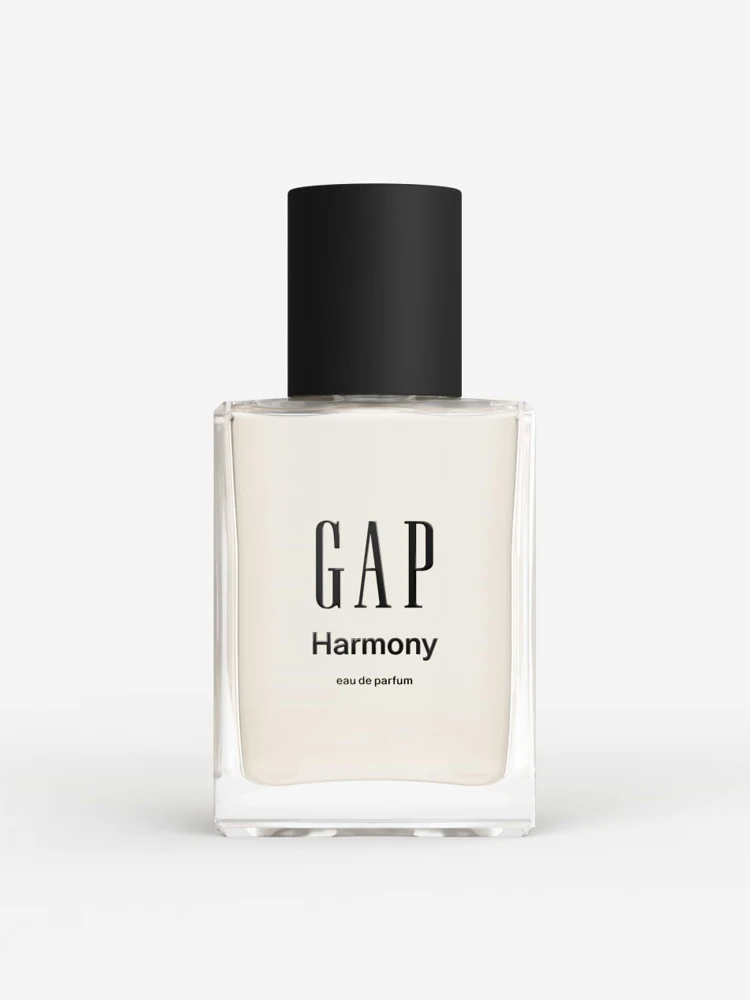
Gap's launch information identifies 10 ml and 50 ml formats. The photograph here shows the full-size Harmony bottle from its matching manufacturer page. Check the name and stated volume in any seller's listing: a collection photograph can include Dream or Om alongside Harmony, and a similar cap or bottle shape cannot establish identity. Different sizes also should not be counted as separate new fragrances in a release list.
Judge value through the total purchase cost and the volume you expect to use. A small format can be sensible when you are still assessing the floral heart, even if its price per millilitre is higher. A larger bottle becomes more attractive once you know the composition. Include shipping, taxes and return terms in the decision. A launch price in one country is not automatically a current local price elsewhere, and this guide makes no unverified retailer availability or authenticity claims.
Frequently asked questions
Is Harmony genuinely new for 2026?
Yes. Gap identifies Harmony as the new addition beside its reimagined historical fragrances. The collection was announced in July and arrived on 30 July 2026.
What are its official notes?
Italian bergamot, apricot nectar and yellow mandarin open the description; gardenia, jasmine and tuberose form the heart; sheer woods, amber and aquatic musks make up the published base.
Is it a marine perfume because of the aquatic musks?
That term alone does not establish a marine identity. Gap classifies Harmony as fruity floral, and the musks sit within its base rather than defining a separate salty or oceanic theme.
Has its longevity been measured for this guide?
No. This is a source-based editorial guide. The official 20% concentration is recorded accurately, but it does not establish a tested number of hours or a guaranteed projection distance.