Which Heaven does this guide cover?
Gap Heaven Eau de Parfum 2026 is the reimagined edition introduced with the July 2026 Gap Beauty collection. The name Heaven existed before this launch, and the present perfume should be identified by its edition and concentration. It is not the similarly named perfume of another brand, nor does the availability of a second bottle size make it a separate fragrance release with a different identity.
The central question is what a floral amber built around pear, flowers and vanilla might offer someone looking for softness without choosing from the name alone. We interpret the manufacturer's published information here. No personal wear test, timed longevity experiment or laboratory examination of the formula has been performed for this guide, so the discussion distinguishes documented notes from suggestions about how to evaluate them yourself.
Pear appears in more than one stage
The official note list places pear in both the opening and the heart. It is joined initially by juniper essence and cardamom SFE, then appears beside honeysuckle and Madagascar vanilla. That repetition suggests the fruit belongs to more than a brief introductory idea in the description. It does not prove how long you will personally recognise pear, nor establish an ingredient percentage or a fixed sequence of evaporation.
When sampling, pay attention to the relationship between fruit and spice rather than looking only for a sweet pear impression. Does the opening feel sufficiently lively for your taste, and does its character remain appealing as the composition settles? Cardamom and juniper are useful reasons to avoid assuming that pear automatically means a simple sugary fragrance. Their actual prominence remains something to explore rather than a performance fact we have measured.
Honeysuckle and vanilla change the question
In the heart, honeysuckle and Madagascar vanilla accompany the pear. This places flowers alongside sweetness instead of defining the perfume as a dessert recipe. A vanilla note does not require an identical outcome in every fragrance: the surrounding materials can change how a wearer reads it. The useful question is whether you enjoy the balance of floral presence and softness, not whether you can label it merely vanilla or non-vanilla.
The Madagascar designation belongs to the published note wording. It is not a reason to invent an extraction method, a natural-content percentage or a complete supply-chain certificate. Likewise, the note list is not the full ingredient formula. Keeping those categories apart lets you use the information as a sampling guide without turning marketing detail into a technical claim the available manufacturer information does not establish.
The amber base needs careful vocabulary
Gap lists patchouli, golden amber identified as Amberever, and celestial musks in the base. Amberever is the name used in the current product description; do not replace it with ambergris or another familiar amber term. Amber in perfume can describe an olfactory direction, and the presence of that word does not automatically imply a natural animal material, a resin ingredient or a particular colour of the liquid.
Celestial musks is also descriptive wording, not a separate botanical species. You can read the base as an ambery-musky frame with patchouli without pretending to know the whole formula. During a trial, note whether the later impression provides the smoothness you wanted or becomes heavier than expected. The result matters more to your decision than trying to identify every named material in isolation or treating the entire list as natural extracts.
What to do with differing brand descriptions
The structured product notes and the shorter scent-story text do not use exactly the same opening vocabulary: the story evokes orris, while the labelled top-note list gives pear, juniper and cardamom. For clarity, this guide follows the explicitly labelled pyramid rather than silently adding orris as a confirmed top note. Descriptive stories and formal note groupings can overlap without being interchangeable statements about placement.
That approach gives a practical rule for interpreting perfume pages: when a short campaign phrase introduces a different facet, do not use it to rebuild the complete pyramid or import ingredients from an older edition. If that facet is important to your purchase, verify it with the maker or sample the fragrance yourself. We do not resolve the discrepancy by inventing a new official list or claiming to have confirmed an iris-heavy opening through personal testing.
A historical name, a current buying decision
Heaven is one of the older Gap names reinterpreted for 2026, alongside Dream, Grass and Om. Harmony is the new name in the same collection. A familiar label can make the choice feel settled before the sample reaches your skin, but the launch concerns updated eau de parfum compositions. It is therefore more accurate to distinguish continuity of name from any untested claim that the modern liquid is identical to an earlier bottle.
If nostalgia is your main motivation, ask two separate questions: does the current perfume give you a welcome association, and would you enjoy buying it for use today? The answers need not be identical. A memory can be meaningful without proving formula equivalence. An old bottle's storage, age and condition also affect a comparison, so a single vintage sample cannot establish a universal verdict about every historical batch or every modern wearer's response.
Choosing a setting for your sample
The pear, vanilla and ambery-musky description makes a softer style worth exploring, but it does not guarantee a faint scent or prescribe one season. Try it in the setting that matters to you: a familiar indoor day, an evening plan or another ordinary context. Notice whether the floral and sweet aspects remain comfortable after the first impression, rather than judging the whole perfume from the moment it leaves the sprayer.
The collection is presented at 20% concentration. That specification does not supply measured hours of persistence or a fixed radius of projection. Begin conservatively around other people and keep track of near-skin presence separately from diffusion. If you compare Heaven with Dream or Harmony, use similar conditions on different occasions. Several scents overlapping on one arm can turn a useful comparison into a contest of immediate detectability rather than personal suitability.
Identifying the edition and comparing value
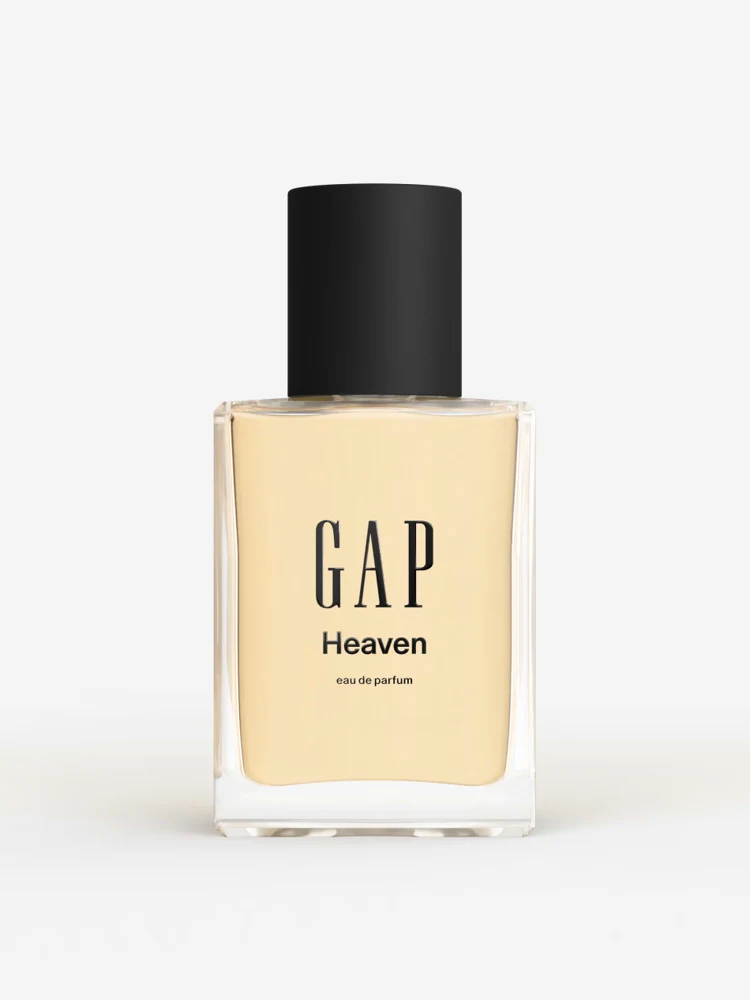
The accompanying manufacturer image shows the clear Heaven eau de parfum bottle with a dark cap. Confirm the Gap name, Heaven designation, concentration and stated volume in a seller's listing. A general photograph of the five-fragrance collection may include the right family but the wrong individual product. An abbreviated title also cannot distinguish an older edition from this one, or Heaven from a perfume of another house with the same name.
Launch information includes 10 ml and 50 ml formats. A small format can be a considered choice when you are unsure how the pear-and-vanilla balance fits your routine; the largest bottle is not automatically the best value if it remains unused. Compare final delivered cost and return conditions. We do not publish a supposedly current local price without verification, equate an overseas launch price with every market, or certify a third-party seller from its listing photograph.
Frequently asked questions
Is Heaven a completely new name in 2026?
No. The name is historical. This article covers the reimagined 2026 Eau de Parfum, with its current published notes, rather than treating all older Heaven products as the same edition.
What are the official notes used here?
Pear, juniper essence and cardamom SFE; honeysuckle, pear and Madagascar vanilla; then patchouli, golden amber identified as Amberever and celestial musks, following the labelled product pyramid.
Why is orris not added to that list?
The short scent story mentions it, but the labelled pyramid has different top notes. We preserve that distinction instead of inventing an expanded official pyramid or a new placement.
Does the guide confirm all-day performance?
No. It is based on manufacturer information and editorial interpretation. The official 20% concentration is not a wear-time measurement, and no hands-on performance test is claimed here.